Books by Enrique García Riaza
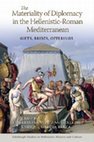
Examines the diplomatic and cultural implications of the exchange of symbolic objects in the anci... more Examines the diplomatic and cultural implications of the exchange of symbolic objects in the ancient world
This volume is a survey of one of the most interesting practices of ancient diplomacy: the gift or exchange of symbolic objects, a custom that may be as old as mankind and that can be traced with certainty back to the emergence of the first written societies. After assessing this background, the volume focuses on the Hellenistic-Roman period (from the end of the 4th century BC to the end of the 1st century BC), a historical period that was transcendental due to the intensity of contacts between human groups, cities and states.
The book brings together international specialists who approach the subject from different chronological, geographical and thematic perspectives. It addresses a number of cross-cutting themes, including the relationship between gifts, loot and bribery, the anxiety in receiving or refusing presents, and the spaces of diplomatic interaction. Offering an innovative approach to the study of ancient diplomacy, based on cultural conditioning factors and subjective perceptions of the gift, it opens up new insights into the study of antiquity and the history of diplomacy.
Eduardo Sánchez Moreno is Senior Lecturer in Ancient History at the Department of Ancient History, Medieval History and Diplomatics at the Autonomous University of Madrid.
Enrique García Riaza is Full Professor in Ancient History at the Department of Historical Sciences and Theory of the Arts, University of the Balearic Islands.
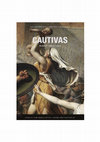
Cautivas en la guerra, secuestradas por piratas, raptadas con fines sexuales, prisioneras, rehene... more Cautivas en la guerra, secuestradas por piratas, raptadas con fines sexuales, prisioneras, rehenes, objetos de venta al mejor postor, las voces femeninas nos apelan con sorprendente actualidad en este apasionante recorrido por la historia. El papel de las mujeres en la época convulsa de la expansión mediterránea de Roma ha permanecido velado por el relato oficial de los acontecimientos. No obstante, una mirada crítica a nuestras fuentes descubre la importante contribución femenina en la logística de la guerra, y su rol determinante en la articulación social de la resistencia frente a las legiones de la República. La población civil, compuesta en gran parte por mujeres y niños, sufrirá en primera persona la crueldad de los conflictos, y será objetivo prioritario de las represalias de los vencedores. Madres, esposas, hijas, unidas por el destino común del cautiverio, nos interrogan en estas páginas sobre la condición de la mujer en nuestro propio mundo.
I. ON DIPLOMACY AS A FORM OF INTERACTION IN THE ROMAN WEST:A SURVEY OF RECENT SCHOLARSHIP. Elena ... more I. ON DIPLOMACY AS A FORM OF INTERACTION IN THE ROMAN WEST:A SURVEY OF RECENT SCHOLARSHIP. Elena Torregaray Pagola
Research on diplomacy, both Greek and Roman, has undergone a remarkable revival in recent years, due, no doubt, to new historiographical interest in the contemporary writing of Ancient History.This paper seeks to establish the current state of the subject, with particular attention to Roman diplomatic strategy in the West. Diplomatic activity in the West is traditionally less studied than in the East, where the sources are much more extensive.
Keywords: Diplomacy, Rome, Roman Republic, Historiography, Western Mediterranean.
II. RIGHTS OF WAR IN THE WEST DURING THE PERIOD OF ROMAN REPUBLICAN EXPANSION. METHODOLOGICAL APPROACHES. Enrique García Riaza
Roman expansion in the West during the Republican period (III-I centuries BC) has bequeathed us a rich dossier of literary and epigraphic references on legal mechanisms for war. In particular, allusions to the use of the formula of deditio and oppugnatio are to be underlined because of their historical value for the study of the conditions of capitulation and the forms of retaliation applied to subject peoples. Assuming the progressive and dynamic codification of war at Rome during the republican period and considering the need to evaluate the diplomatic aspects of the institutions of Western peoples, interlocutors of Rome at this time, we offer a synthesis of recent research on the subject, a reflection on the main obstacles in the principal aspects of the topic, and a series of suggestions for the future.
Keywords: ius belli, deditio, oppugnatio, diplomacy, Roman Republic
Keywords: Diplomacy, Rome, Roman Republic, Historiography, Western Mediterranean.
III.THE INFRINGEMENT OF IUS BELLI DURING THE FIRST HALF OF THE SECOND CENTURY BC. FIVE CASE-STUDIES. José Antonio Martínez Morcillo
During the first half of the second century BC, Roman imperial expansion witnessed a number of infringements of ius belli. The episode involving Ser. Sulpicius Galba, in 150 BC, is one of the most interesting examples, and well illustrates the agency of Roman aristocrats in such matters. In order to elucidate the primary sources of Roman policy in wartime, this paper will consider five case-studies.These episodes offer the further possibility of distinguishing Senatorial decisions and comparing them with the attitudes of the individual commanders.
Keywords: Roman expansion, violation of ius belli, aristocratic competition, imperialism.
IV. PROVINCIA SICILIA: BETWEEN ROMAN AND LOCAL IN THE THIRD CENTURY BC
Jonathan Prag
Sicily, the first transmarine ‘provincia’ of the Republican empire offers a number of new perspectives on the developing processes of Roman imperialism, and the relationship between Roman imperialism and local communities.This paper will explore a number of examples of such imperial interaction in Sicily and consider their implications for Republican imperialism in the west. These examples include: the marking out of the first known Roman road outside of Italy, during the First Punic War; the beginnings of taxation and magisterial rule of western Sicily immediately after the First Punic War; the use of kinship diplomacy in Sicily in the third century BC; the development of epigraphic practice in Sicily in this period, and the contemporary development in epigraphic practice across the western Mediterranean (with a particular focus upon the interpretation of the specific phenomena of tesserae hospitales and bronze epigraphy); the use of local military manpower by the imperial power; and the potential formation of a ‘Sicilian’ identity in conjunction with the creation of the province.
Keywords: Roman Sicily, Punic Wars, kinship diplomacy, epigraphic habit, hellenistic epigraphy.
V. FROM RESISTANCE TO NEGOTIATION: ON THE ATTITUDES AND CAPACITIES OF HISPANIC COMMUNITIES TO ROMAN IMPERIALISM.
Eduardo Sánchez Moreno
In the light of recent research a reflection is made on some assumptions and categories applied to the interaction established between the peoples of the Iberian Peninsula and the Roman State from the end of the third century and throughout the second century BC. Therefore, instead of a generalized resistance attitude on the indigenous communities facing Rome, a devoted idea in scholarship, it is defended a negotiating horizon that rather suits the political, military, and diplomatic organization of local communities as well as the proper dynamics of Roman imperialism.
Keywords:
Roman imperialism, indigenous communities of the Iberian Peninsula, interaction, resistance, negotiation.
VI. ROMAN PROVINCIAL ADMINISTRATION DURING THE REPUBLIC AS SEEN THROUGH THE EPIGRAPHICAL EVIDENCE:THE CASE OF HISPANIA
Borja Díaz Ariño
The development of the Roman provincial system is a direct consequence of the republican expansion in the western Mediterranean. In this matter, the Iberian Peninsula seems particularly interesting due to the short time of its conquest and the early creation of the provinces Hispania Citerior and Hispania Ulterior. The essential source to better understand this process is Roman Republican epigraphy as it sheds some light to certain aspects that still are fragmentary known or ancient authors barely mention.
Keywords: Roman Republican Epigraphy, provincial governors, Hispania Citerior, Hispania Ulterior.
VII. CURRENT RESEARCH IN FRANCE ON ROMANO-GALLIC INTER-RELATIONS
Laurent Lamoine
Romano-Gallic relations are a research field that is currently experiencing a revival in France. The military aspect of these relations, more particularly the War of the Gauls waged by Julius Caesar, a long-lasting source of inspiration for historians, intellectuals and French politicians, is also affected by this phenomenon. National archaeology, even though its results mostly concern material culture, played a major role in this revival.Within the chronological and spatial boundaries of the second and first centuries B.C. and of the Bracata and Comata Gauls, current French research dealing with these relations is split into at least three strands.The first one corresponds to a reading of literary and epigraphic sources that is rid of complexes, historians no longer being afraid of their deformation, their bias or, quite simply their limit. The second strand considers the (re)-conciliation between the contribution of both archaeology and texts. A focus on the site of Tintignac in the Corrèze, where metallic material was found in 2004 and has been studied since, permitting interpretations in relation to the theme, grants a better understanding of the issue at stake with this evolution.This example also illustrates, more generally, a return to favour of war (or of the culture of war) as an object of study for French historians, a rehabilitation that forms the third strand.
Keywords Bracata Gaul, Comata Gaul, Caesar,Tintignac, National Antiquities, environmental archeology, epigraphy, war, diplomacy, concilium armatum

La asociación militar es acaso la más conspicua de las relaciones internacionales urdidas en el... more La asociación militar es acaso la más conspicua de las relaciones internacionales urdidas en el marco de la expansión de la República romana por el Mediterráneo tras su triunfo sobre Cartago en la Primera Guerra Púnica. Desde la convergencia puntual de fuerzas ante amenazas apremiantes como fueron el asedio de una ciudad o la invasión de un territorio, hasta la formación de grandes ententes fraguadas sobre complejas redes de alianza reactivadas en el tiempo, fluctuando así pues entre la guerra y la diplomacia, múltiples pueblos y estados visitados por el imperium de Roma han sabido articular estrategias de defensa y construcción suprapolítica amparadas en la conjunción de ejércitos coaligados.
Trasladando el interés y la proyección historiográfica de esta temática, Unidos en armas. Coaliciones militares en el Occidente antiguo reúne ocho estudios en los que otros tantos especialistas analizan algunas de las más interesantes coaliciones registradas entre los siglos III y I a.C. en diversos escenarios del expansionismo romano (Península Itálica, las Galias, Hispania), y debaten aspectos transversales a las mismas como fueron, más allá de parámetros estrictamente militares, el liderazgo y la articulación política, la conectividad regional, la propaganda ideológica o el refrendo religioso.
Este libro es fruto del Proyecto «'Symmachía'. Entre la paz y la guerra: alianzas, confederaciones y diplomacia en el Occidente mediterráneo (siglos III-I aC)», financiado por la Agencia Estatal de Investigación (HAR2011-27782). Constituye un resultado de las actividades científicas del Grupo Occidens (www.occidens.es), formado por investigadores españoles e internacionales que trabajan sobre los aspectos diplomáticos, militares e ideológicos de la expansión romano-republicana.
Otras publicaciones de Occidens son: García Riaza (ed.), De fronteras a provincias. Interacción e Integración en Occidente (ss. III-I a.C.), Edicions UIB, Palma, 2011, y García Riaza, E. - Sanz, A.-M. (eds.), 'In fidem venerunt'. Expresiones de sometimiento a la República Romana en Occidente, Editorial Dykinson, Madrid, 2019.
Eduardo Sánchez Moreno es profesor titular de Historia Antigua en la Universidad Autónoma de Madrid, donde ejerce la docencia desde 1995. Centra su investigación en el estudio de los pueblos prerromanos de la Península Ibérica y su interacción con los imperialismos cartaginés y romano. Es cofundador del Grupo de investigación Occidens, actualmente adscrito a la Universidad Autónoma de Madrid.
Enrique García Riaza es catedrático de Historia Antigua en la Universidad de las Illes Balears, donde ejerce la docencia desde 1994. Sus líneas de investigación son la diplomacia y el derecho de guerra durante la expansión romano-republicana, así como la Historia Antigua de las Islas Baleares. Es cofundador del Grupo de Investigación Occidens, actualmente adscrito a la Universidad Autónoma de Madrid.
Papers by Enrique García Riaza
Hacia el confín de la Tierra: La azarosa expansión romana en el occidente peninsular
Desperta Ferro: Antigua y medieval, 2020
Information Exchange and Political Communication in the Triumviral Period: Some Remarks on Means and Methods
HAL (Le Centre pour la Communication Scientifique Directe), 2008
Illustration de couverture : gravure extraite de Les plus beaux monuments de Rome ancienne, par M... more Illustration de couverture : gravure extraite de Les plus beaux monuments de Rome ancienne, par Monsieur Barrault, 1761 © aimablement prêtée par Tanca Antichità, Rome

Le protocole diplomatique entre particularisme romain et universalisme : quelques réflexions sur l’Occident républicain
Collection de l'Institut des Sciences et Techniques de l'Antiquité, 2015
" Diplomatic protocol between Roman particularism and universalism ". While they were i... more " Diplomatic protocol between Roman particularism and universalism ". While they were in contact with the peoples of Eastern Gaul and the Iberian Peninsula, the Romans discovered practices that sources describe in terms of otherness while obliterating their specificities. Yet the study of protocols in starting and ending wars, as well as the rites and procedures of those socalled Barbarian populations reveals that they were part of a Hellenic diplomatic culture common to the entire Mediterranean Basin.Au contact des populations occidentales de Gaule et de la péninsule ibérique, les Romains ont été confrontés à des pratiques que les sources présentent sous le signe de l’altérité tout en en gommant les particularismes. L’étude des protocoles d’entrée et de sortie de guerre, mais aussi des rites et des gestes de ces populations dites barbares montre pourtant qu’elles participaient d’une culture diplomatique hellénique commune à tout le bassin méditerranéen.Garcia Riaza Enrique. Le protocole diplomatique entre particularisme romain et universalisme : quelques réflexions sur l’Occident républicain. In: La diplomatie romaine sous la République : réflexions sur une pratique. Actes des rencontres de Paris (21-22 juin 2013) et Genève (31 octobre-1er novembre 2013) Besançon : Institut des Sciences et Techniques de l'Antiquité, 2015. pp. 15-41. (Collection « ISTA », 1305
La diplomacia y Pirro
Desperta Ferro: Antigua y medieval, 2019
“Todo lo conquista la palabra, que hasta al hierro del enemigo podria igualar” (Plutarco, Pirro X... more “Todo lo conquista la palabra, que hasta al hierro del enemigo podria igualar” (Plutarco, Pirro XIV.2, citando a Euripides, Las fenicias 517-518). El episodio de la vida de Pirro es sintomatico de la compleja red de relaciones que establecian los Estados entre si a principios del siglo III a. C.; la diplomacia, en concreto, nos sirve de boton de muestra para comprender los usos politicos del momento.
Roma y la Celtiberia hasta la Paz de Graco
Desperta Ferro: Antigua y medieval, 2017
Las relaciones entre Roma y el mundo celtiberico fueron, probablemente, tan antiguas como el inte... more Las relaciones entre Roma y el mundo celtiberico fueron, probablemente, tan antiguas como el interes de la Republica en los asuntos de la peninsula iberica, que se remonta a fechas anteriores al estallido de la Segunda Guerra Punica. “‘Hemos sido enviados por nuestro pueblo para conocer en que basais vuestra fe para atacarnos’. A esta pregunta respondio Graco que habia llegado confiando en un excelente ejercito, y que si deseaban comprobarlo para poder informar mas detalladamente a los suyos, les daria la oportunidad” (Livio, XL.47.6-7).
Une institution politique dans le contexte de l’impérialisme romain : les conuentus omnium sociorum dans les références hispaniques de Tite-Live
Ktema, 2016
During the Second Punic War and in the first phases of the provincial organisation of Roman Spain... more During the Second Punic War and in the first phases of the provincial organisation of Roman Spain a series of meetings are attested between Hispanic legationes and Roman authorities (217, 210, 209/ 8 and 195 BC). The aim of these encounters was, in the first place, to coordinate actions against Punic forces, but subsequently they developed into mechanisms for the control of the cities, under the new provincial framework.
La supuesta contravención del Ius Legationis en el "Bellum Gallicum
133 a.C. Los rescoldos de Numancia
Les reunions politiques des Gaulois (1er siècle au J.C.- 1er siécle ap.J.C.)
Sobre los mecanismos de integración de los vencidos en el Occidente romano-republicano: algunas observaciones
La presencia cartaginesa en Hispania (237-206 a.C.): aspectos diplomático-militares
Mayurqa: revista del Departament de Ciències Històriques i Teoria de les Arts, 1997
El propósito de este trabajo es ofrecer un estudio sobre la función del derecho de guerra, así co... more El propósito de este trabajo es ofrecer un estudio sobre la función del derecho de guerra, así como del empleo de las redes diplomáticas en la política exterior de la época de Augusto. Se analizan en primer lugar los mecanismos de aplicación del ius belli en lo relativo al tratamiento de los vencidos. Las iniciativas del Princeps y de sus generales son estudiadas comparativamente con la tradición republicana y con la nueva problemática de las guerras civiles. Estas generaron importantes distorsiones en la puesta en práctica del derecho de guerra, que se había desarrollado para dar respuesta a con?ictos contra peregrini. De igual forma, se estudian los procedimientos, signi?cación e instrumentalización de las embajadas o legationes dirigidas a Augusto, así como el uso político de la toma de rehenes, para concluir que, también en este campo, el Princeps fue responsable, a pesar de su imagen tradicionalista, de importantes transformaciones./n The purpose of this paper is to provide a s...
Unidos en armas: coaliciones militares en el Occidente antiguo
Edicions UIB, 2019
Dos nuevos testimonios de epigrafía funeraria procedentes de Pollentia: Alcúdia, Mallorca
L'Antiguitat clàssica i la seva pervivència a les Illes Balears: XXIII Jornades d'Estudis Històrics Locals : Palma, del 17 al 19 de novembre de 2004, 2005, ISBN 8495876094, págs. 355-358, 2005
The triumviral period: civil war, political crisis and socioeconomic transformations
Nothing from the subsequent Augustan age can be fully explained without understanding the previou... more Nothing from the subsequent Augustan age can be fully explained without understanding the previous Triumviral period (43-31 BC). In this book, twenty experts from nine different countries and nineteen universities examine the Triumviral age not merely as a phase of transition to the Principate but as a proper period with its own dynamics and issues, which were a consequence of the previous years. The volume aims to address a series of underlying structural problems that emerged in that time, such as the legal nature of power attributed to the Triumvirs; changes and continuity in Republican institutions, both in Rome and the provinces of the Empire; the development of the very concept of civil war; the strategies of political communication and propaganda in order to win over public opinion; economic consequences for Rome and Italy, whether caused by the damage from constant wars or, alternatively, resulting from the proscriptions and confiscations carried out by the Triumvirs; and the transformation of Roman-Italian society. All these studies provide a complete, fresh and innovative picture of a key period that signaled the end of the Roman Republic. With papers from: F. Vervaet F. Pina Polo M-C Ferriès V. Arena F. Rohr Vio C. Steel M. Jehne F. Hurlet H. van der Blom E. García Riaza K. Welch D. Maschek C. Rosillo-López M. García Morcillo A. Díaz Fernández A. Raggi W. J. Tatum C. Ando C.H. Lange H. Cornwell



Uploads
Books by Enrique García Riaza
This volume is a survey of one of the most interesting practices of ancient diplomacy: the gift or exchange of symbolic objects, a custom that may be as old as mankind and that can be traced with certainty back to the emergence of the first written societies. After assessing this background, the volume focuses on the Hellenistic-Roman period (from the end of the 4th century BC to the end of the 1st century BC), a historical period that was transcendental due to the intensity of contacts between human groups, cities and states.
The book brings together international specialists who approach the subject from different chronological, geographical and thematic perspectives. It addresses a number of cross-cutting themes, including the relationship between gifts, loot and bribery, the anxiety in receiving or refusing presents, and the spaces of diplomatic interaction. Offering an innovative approach to the study of ancient diplomacy, based on cultural conditioning factors and subjective perceptions of the gift, it opens up new insights into the study of antiquity and the history of diplomacy.
Eduardo Sánchez Moreno is Senior Lecturer in Ancient History at the Department of Ancient History, Medieval History and Diplomatics at the Autonomous University of Madrid.
Enrique García Riaza is Full Professor in Ancient History at the Department of Historical Sciences and Theory of the Arts, University of the Balearic Islands.
Research on diplomacy, both Greek and Roman, has undergone a remarkable revival in recent years, due, no doubt, to new historiographical interest in the contemporary writing of Ancient History.This paper seeks to establish the current state of the subject, with particular attention to Roman diplomatic strategy in the West. Diplomatic activity in the West is traditionally less studied than in the East, where the sources are much more extensive.
Keywords: Diplomacy, Rome, Roman Republic, Historiography, Western Mediterranean.
II. RIGHTS OF WAR IN THE WEST DURING THE PERIOD OF ROMAN REPUBLICAN EXPANSION. METHODOLOGICAL APPROACHES. Enrique García Riaza
Roman expansion in the West during the Republican period (III-I centuries BC) has bequeathed us a rich dossier of literary and epigraphic references on legal mechanisms for war. In particular, allusions to the use of the formula of deditio and oppugnatio are to be underlined because of their historical value for the study of the conditions of capitulation and the forms of retaliation applied to subject peoples. Assuming the progressive and dynamic codification of war at Rome during the republican period and considering the need to evaluate the diplomatic aspects of the institutions of Western peoples, interlocutors of Rome at this time, we offer a synthesis of recent research on the subject, a reflection on the main obstacles in the principal aspects of the topic, and a series of suggestions for the future.
Keywords: ius belli, deditio, oppugnatio, diplomacy, Roman Republic
Keywords: Diplomacy, Rome, Roman Republic, Historiography, Western Mediterranean.
III.THE INFRINGEMENT OF IUS BELLI DURING THE FIRST HALF OF THE SECOND CENTURY BC. FIVE CASE-STUDIES. José Antonio Martínez Morcillo
During the first half of the second century BC, Roman imperial expansion witnessed a number of infringements of ius belli. The episode involving Ser. Sulpicius Galba, in 150 BC, is one of the most interesting examples, and well illustrates the agency of Roman aristocrats in such matters. In order to elucidate the primary sources of Roman policy in wartime, this paper will consider five case-studies.These episodes offer the further possibility of distinguishing Senatorial decisions and comparing them with the attitudes of the individual commanders.
Keywords: Roman expansion, violation of ius belli, aristocratic competition, imperialism.
IV. PROVINCIA SICILIA: BETWEEN ROMAN AND LOCAL IN THE THIRD CENTURY BC
Jonathan Prag
Sicily, the first transmarine ‘provincia’ of the Republican empire offers a number of new perspectives on the developing processes of Roman imperialism, and the relationship between Roman imperialism and local communities.This paper will explore a number of examples of such imperial interaction in Sicily and consider their implications for Republican imperialism in the west. These examples include: the marking out of the first known Roman road outside of Italy, during the First Punic War; the beginnings of taxation and magisterial rule of western Sicily immediately after the First Punic War; the use of kinship diplomacy in Sicily in the third century BC; the development of epigraphic practice in Sicily in this period, and the contemporary development in epigraphic practice across the western Mediterranean (with a particular focus upon the interpretation of the specific phenomena of tesserae hospitales and bronze epigraphy); the use of local military manpower by the imperial power; and the potential formation of a ‘Sicilian’ identity in conjunction with the creation of the province.
Keywords: Roman Sicily, Punic Wars, kinship diplomacy, epigraphic habit, hellenistic epigraphy.
V. FROM RESISTANCE TO NEGOTIATION: ON THE ATTITUDES AND CAPACITIES OF HISPANIC COMMUNITIES TO ROMAN IMPERIALISM.
Eduardo Sánchez Moreno
In the light of recent research a reflection is made on some assumptions and categories applied to the interaction established between the peoples of the Iberian Peninsula and the Roman State from the end of the third century and throughout the second century BC. Therefore, instead of a generalized resistance attitude on the indigenous communities facing Rome, a devoted idea in scholarship, it is defended a negotiating horizon that rather suits the political, military, and diplomatic organization of local communities as well as the proper dynamics of Roman imperialism.
Keywords:
Roman imperialism, indigenous communities of the Iberian Peninsula, interaction, resistance, negotiation.
VI. ROMAN PROVINCIAL ADMINISTRATION DURING THE REPUBLIC AS SEEN THROUGH THE EPIGRAPHICAL EVIDENCE:THE CASE OF HISPANIA
Borja Díaz Ariño
The development of the Roman provincial system is a direct consequence of the republican expansion in the western Mediterranean. In this matter, the Iberian Peninsula seems particularly interesting due to the short time of its conquest and the early creation of the provinces Hispania Citerior and Hispania Ulterior. The essential source to better understand this process is Roman Republican epigraphy as it sheds some light to certain aspects that still are fragmentary known or ancient authors barely mention.
Keywords: Roman Republican Epigraphy, provincial governors, Hispania Citerior, Hispania Ulterior.
VII. CURRENT RESEARCH IN FRANCE ON ROMANO-GALLIC INTER-RELATIONS
Laurent Lamoine
Romano-Gallic relations are a research field that is currently experiencing a revival in France. The military aspect of these relations, more particularly the War of the Gauls waged by Julius Caesar, a long-lasting source of inspiration for historians, intellectuals and French politicians, is also affected by this phenomenon. National archaeology, even though its results mostly concern material culture, played a major role in this revival.Within the chronological and spatial boundaries of the second and first centuries B.C. and of the Bracata and Comata Gauls, current French research dealing with these relations is split into at least three strands.The first one corresponds to a reading of literary and epigraphic sources that is rid of complexes, historians no longer being afraid of their deformation, their bias or, quite simply their limit. The second strand considers the (re)-conciliation between the contribution of both archaeology and texts. A focus on the site of Tintignac in the Corrèze, where metallic material was found in 2004 and has been studied since, permitting interpretations in relation to the theme, grants a better understanding of the issue at stake with this evolution.This example also illustrates, more generally, a return to favour of war (or of the culture of war) as an object of study for French historians, a rehabilitation that forms the third strand.
Keywords Bracata Gaul, Comata Gaul, Caesar,Tintignac, National Antiquities, environmental archeology, epigraphy, war, diplomacy, concilium armatum
Trasladando el interés y la proyección historiográfica de esta temática, Unidos en armas. Coaliciones militares en el Occidente antiguo reúne ocho estudios en los que otros tantos especialistas analizan algunas de las más interesantes coaliciones registradas entre los siglos III y I a.C. en diversos escenarios del expansionismo romano (Península Itálica, las Galias, Hispania), y debaten aspectos transversales a las mismas como fueron, más allá de parámetros estrictamente militares, el liderazgo y la articulación política, la conectividad regional, la propaganda ideológica o el refrendo religioso.
Este libro es fruto del Proyecto «'Symmachía'. Entre la paz y la guerra: alianzas, confederaciones y diplomacia en el Occidente mediterráneo (siglos III-I aC)», financiado por la Agencia Estatal de Investigación (HAR2011-27782). Constituye un resultado de las actividades científicas del Grupo Occidens (www.occidens.es), formado por investigadores españoles e internacionales que trabajan sobre los aspectos diplomáticos, militares e ideológicos de la expansión romano-republicana.
Otras publicaciones de Occidens son: García Riaza (ed.), De fronteras a provincias. Interacción e Integración en Occidente (ss. III-I a.C.), Edicions UIB, Palma, 2011, y García Riaza, E. - Sanz, A.-M. (eds.), 'In fidem venerunt'. Expresiones de sometimiento a la República Romana en Occidente, Editorial Dykinson, Madrid, 2019.
Eduardo Sánchez Moreno es profesor titular de Historia Antigua en la Universidad Autónoma de Madrid, donde ejerce la docencia desde 1995. Centra su investigación en el estudio de los pueblos prerromanos de la Península Ibérica y su interacción con los imperialismos cartaginés y romano. Es cofundador del Grupo de investigación Occidens, actualmente adscrito a la Universidad Autónoma de Madrid.
Enrique García Riaza es catedrático de Historia Antigua en la Universidad de las Illes Balears, donde ejerce la docencia desde 1994. Sus líneas de investigación son la diplomacia y el derecho de guerra durante la expansión romano-republicana, así como la Historia Antigua de las Islas Baleares. Es cofundador del Grupo de Investigación Occidens, actualmente adscrito a la Universidad Autónoma de Madrid.
Papers by Enrique García Riaza